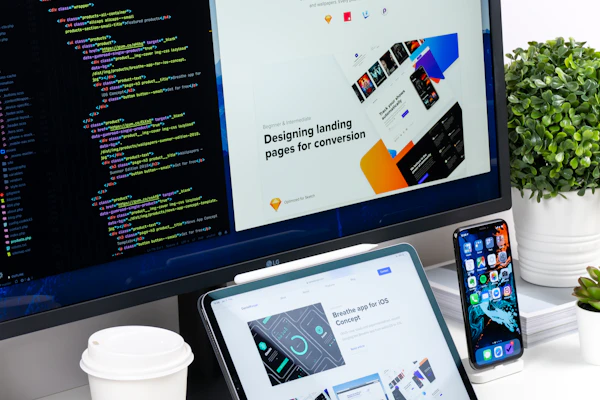
The Guide to App Development in 2026 for Marketing & Sales [Home](/) > [Blog](/blog) > [Technology](/categories/technology) > App Development 2026 The world of mobile and web applications has undergone a massive shift as we move through 2026. For digital nomads, remote founders, and marketing professionals, the way we build software is no longer just about code; it is about creating high-speed funnels that convert users into loyal advocates. If you are sitting in a [coworking space in Lisbon](/cities/lisbon) or managing a distributed team from [Bali](/cities/ubud), understanding the current state of software creation is vital for staying ahead of the competition. In the past, building an app was a technical hurdle that required months of planning and hefty budgets. Today, the barriers have crumbled. The transition toward hyper-personalized user experiences means that marketing and sales are no longer separate departments from the development team. They are the core drivers of the technology stack. As we look at the current [remote work trends](/blog/remote-work-trends-2026), the convergence of artificial intelligence, low-code platforms, and decentralized systems has redefined what a "minimum viable product" looks like. For a [startup founder](/categories/startups) looking to capture a global market, the focus has shifted from "can we build this?" to "how fast can this sell?" This guide explores the technical and strategic shifts that define 2026, providing a roadmap for those who want to build tools that don't just function, but dominate their respective niches. Whether you are hiring a [remote developer](/talent) or using [no-code tools](/blog/no-code-guide) to build your first prototype, the strategies outlined here will help you navigate the complex intersection of code and commerce. ## The Shift to AI-Native Development Architecture By 2026, "adding AI" to an app is an outdated concept. Modern applications are now AI-native, meaning the core logic of the software is built around machine learning models rather than static code blocks. For marketing and sales teams, this means the app is constantly learning from user behavior and adjusting its interface in real-time to maximize conversion. ### Predictive User Interfaces
We have moved beyond simple A/B testing. Modern apps use predictive interfaces that change layout based on the user's previous actions. If a user frequently visits the pricing page, the app might automatically highlight a specific discount or move the "Talk to Sales" button to a more prominent position. This level of customization ensures that the friction between a prospect and a sale is virtually non-existent. ### Automated Lead Qualification
In 2026, the app itself acts as the first line of sales. Through advanced natural language processing, integrated chatbots are no longer following a script. They analyze the user’s intent, company size (via background data scraping), and urgency. By the time a lead reaches your remote sales team, they have already been pre-qualified by the application’s core logic. This allows companies to scale without proportionally increasing their headcount in expensive hubs like San Francisco or London. ## The Rise of the Marketing-First Growth Stack Development is no longer a back-room activity. The most successful apps in 2026 are built with a marketing-first mindset. This involves integrating tracking, analytics, and virality loops into the very first sprint of development. ### Building for Virality
When building an app, developers must consider the "shareability" of every feature. This isn't just about a social share button. It's about data-driven milestones that users want to show off. For example, a project management tool might generate a "Productivity Pulse" report that users can share on LinkedIn, subtly advertising the app to other potential B2B clients. This organic growth reduces the reliance on expensive paid ads. ### Native Attribution Models
With the death of third-party cookies, successful apps build their own attribution models directly into the software. By tracking user touchpoints across different devices and sessions natively, marketing teams get a clear picture of what drives sales. This is especially important for nomad entrepreneurs who need to monitor their spend carefully while traveling through places like Mexico City or Medellin. ## Low-Code and No-Code for Rapid Sales Prototypes The speed of the market in 2026 does not allow for eighteen-month development cycles. Low-code and no-code platforms have matured to the point where they can handle complex enterprise-grade logic. This allows sales teams to build "sales-specific" versions of an app for high-value clients in a matter of days. ### Bespoke Client Portals
Imagine you are pitching a large contract to a firm in Dubai. Instead of a generic slide deck, your sales team uses a low-code platform to build a custom dashboard that mirrors the client's actual data and branding. This level of personalization is a massive competitive advantage. It shows the client exactly what their life will look like once they sign the contract. ### The Citizen Developer Movement
We are seeing a rise in "citizen developers"—marketing professionals who can build and maintain their own internal tools. By using no-code automation, a marketing lead can connect their CRM, email marketing software, and the core app without waiting for a developer's help. This agility is what separates the top-tier remote companies from the slow-moving traditional corporations. ## User Experience as a Sales Engine In 2026, user experience (UX) is not just about aesthetics; it is the primary driver of the sales funnel. A clunky interface is more than an eyesore—it is a lost revenue opportunity. ### Reducing Time-to-Value
The "Time-to-Value" (TTV) is the most critical metric for any app in 2026. How quickly can a user experience the "Aha!" moment where they understand the product's worth? Marketing teams are now working with UX designers to ensure the onboarding process is shorter than three minutes. If you are targeting busy professionals in New York or Tokyo, every second of friction results in a higher churn rate. ### Micro-Interactions and Engagement
Small animations and feedback loops, known as micro-interactions, are used to guide users toward sales goals. Achieving a goal in the app might be met with a subtle haptic feedback or a celebratory visual, reinforcing the positive behavior. These psychological cues are essential for keeping users engaged and moving them toward a paid subscription or a premium feature upgrade. ## Global Distribution and Cross-Border Considerations For the digital nomad community, building an app means building for a global audience from day one. In 2026, localization goes far beyond just translating text. ### Regional Payment Optimization
An app that sells well in Berlin might fail in Buenos Aires if it doesn't support local payment methods. Modern app development involves integrating global payment gateways that automatically adjust based on the user's location. This includes handling local taxes, currency fluctuations, and preferred payment platforms like WeChat Pay, Pix, or local European bank transfers. ### Compliance and Data Sovereignty
As data privacy laws become more fragmented globally, your app must be built with a flexible compliance layer. Using decentralized storage or regional server clusters (like those found in tech hubs like Singapore) ensures that you meet GDPR, CCPA, and other local regulations without having to rewrite your entire codebase for every market. ## The Role of Community in App Growth By 2026, the most successful apps act as the "town square" for their niche. Building community features directly into the product is a major strategy for both retention and organic sales. ### In-App Networking
Apps are increasingly becoming social networks. A fitness app isn't just for tracking runs; it's for connecting with other runners in Cape Town. A coding tool isn't just for writing scripts; it's for sharing snippets with a global community. These social layers create high "switching costs," making it harder for a competitor to steal your users. ### User-Generated Content as Marketing
Encouraging users to create and share content from within your app is the most effective marketing strategy in 2026. Whether it's a design template, a financial report, or a travel itinerary, providing users with the tools to export and brand their work helps spread your app's name across social media platforms like LinkedIn and Twitter. ## Security and Trust in the Sales Process In an era of deepfakes and data breaches, trust is the most valuable currency. Your app's technical security is a major selling point. ### Zero-Knowledge Architecture
Marketing your app as "Zero-Knowledge" means that even you, the developer, cannot see the user's data. This is a massive draw for enterprise clients who are worried about industrial espionage. Highlighting your security protocols in your sales outreach builds immediate credibility. ### Transparent AI Models
As users become more skeptical of AI, transparency becomes a feature. Successful apps in 2026 include a "Why am I seeing this?" button that explains the logic behind an AI-driven recommendation. This honesty builds a stronger bond between the brand and the consumer, eventually leading to higher customer lifetime value. ## The Future of Mobile: Beyond the Smartphone While smartphones are still dominant, the "app" of 2026 often extends to wearable tech and augmented reality (AR) devices. This opens up entirely new channels for sales and marketing. ### Spatial Commerce and AR
For retail and real estate apps, AR is no longer a gimmick. A user looking for a rental apartment in Barcelona can use their AR glasses to see the layout of a room before visiting. Marketing teams are now hiring 3D designers and spatial architects to create these immersive sales experiences. ### Voice and Ambient Computing
As voice assistants become more capable, your app needs to be "searchable" via voice. This means optimizing your app's content for natural language queries. A user in their car should be able to say, "Find the best coworking space nearby," and your app should be the one to provide the answer and the booking link. ## Hiring the Right Team for 2026 Building an app in this environment requires a new kind of talent. You need people who understand both the code and the commerce. ### The Rise of the Growth Engineer
The Growth Engineer is a hybrid role that sits between the product and marketing teams. They don't just build features; they build experiments. They are experts in data analytics and can quickly ship code that tests a new sales hypothesis. ### Sourcing Remote Talent
Finding the right people is easier than ever if you look globally. Platforms for remote talent allow you to find specialized skills in emerging tech hubs. You might find your lead developer in Warsaw and your UI designer in Bangkok. This distributed model not only saves on costs but brings diverse perspectives to your product development. ## Actionable Steps for Remote Founders If you are starting a project today, follow this checklist to ensure your app is optimized for the 2026 market: 1. Prioritize Speed over Perfection: Use low-code tools to build a prototype and get it in front of real users within weeks, not months.
2. Integrate Analytics Early: Don't wait until after launch to think about tracking. Know your conversion rates from day one.
3. Focus on Localized UX: If you are targeting a specific region, like Southeast Asia, ensure your app feels native to that culture and its digital habits.
4. Build a Feedback Loop: Create a direct channel within the app for users to tell you what they want. In 2026, the most successful products are co-created with their users.
5. Invest in Technical SEO: Ensure your app's landing pages and content are optimized for both humans and AI search bots. Check our SEO guide for more details. ## Mastering the Tech-Sales Intersection The most visible change in 2026 is the erasure of the line between software engineering and revenue generation. In previous decades, a developer's job ended when the code was deployed. Today, the code is the salesperson. The logic embedded in the application determines whether a visitor remains a casual browser or becomes a high-ticket client. This requires a shift in how remote founders approach their roadmap. For instance, when designing a new feature, the first question should not be "is this technically feasible?" instead, it should be "how does this reduce the sales cycle?". If a feature doesn't directly contribute to user acquisition, retention, or expansion, it is likely a distraction. In a world where SaaS competition is at an all-time high, focus is the most valuable resource for any team operating from a home office. ### Data-Driven Personalization at Scale
Personalization in 2026 is about more than just putting a user's name in an email. It is about "In-App Paths." Using data from CRM integrations, an app can detect if a user is a small business owner or a corporate executive. The small business owner might see a simplified interface with tutorials on basic features, while the executive is greeted with a data-heavy dashboard showing ROI and team performance. This branch-logic in development ensures that the product remains relevant to all segments of the target audience, making the sales process feel organic rather than forced. ## The Evolution of the "App Store" Economy We are seeing a move away from the traditional duopoly of app stores. In 2026, web-based applications (PWAs) and direct-to-consumer software distribution are the standard for marketing professionals. This shift has major implications for sales. ### Direct Relationships and Higher Margins
By bypassing traditional app stores, companies can keep the 15-30% "tax" that platforms used to take. This extra margin can be redirected into customer acquisition or higher-quality customer support. For a nomad living in a cost-effective city like Chiang Mai, these margins can be the difference between a struggling side-project and a thriving global business. ### Progressive Web Apps (PWAs) as Funnels
A PWA allows a user to "install" an app directly from a browser. Marketing teams are using this to turn blog readers into app users instantly. For example, while someone is reading an article about freelance finance on your site, you can offer a "one-click install" for your budget tracking tool. This friction-free entry point is a cornerstone of growth in 2026. ## Integrating Sales Hubs within Your Product In the past, "Sales" was a destination—a page you visited or a person you called. In 2026, the sales hub is integrated into every corner of the application. ### Contextual "Buy" Triggers
Instead of a single "Pricing" page, modern apps use contextual triggers. If a user is using a free version of a project management tool and tries to add a 6th team member, a subtle, helpful popup appears explaining the benefits of the "Team Plan." This "just-in-time" selling is far more effective than traditional email blasts. It catches the user at the exact moment they feel the "pain" that your paid product solves. ### Leveraging Social Proof Programmatically
Social proof is no longer just a static list of logos on a landing page. In 2026, apps integrate real-time social proof. A message might appear saying, "3 other people in Austin just upgraded to the Pro plan for this feature." This creates a sense of community and urgency that is deeply rooted in human psychology. It makes the user feel like they are part of a movement, not just a line item in a database. ## Technical SEO for App Discoverability The way people find apps has changed. While social media is still a player, AI-driven search engines are the most frequent way users discover new tools. To appear in these results, your app development must include a strategy for technical SEO. ### Optimizing for LLM Crawlers
Large Language Models (LLMs) like those powering search in 2026 need to be able to "read" your app's value proposition. This means having clean, structured data on your public-facing pages. Using Schema markup effectively tells these AIs what your app does, who it’s for, and why it’s better than the competition. If an AI assistant is asked, "What's the best tool for remote team collaboration?", you want your app to be the top answer. ### Content as the Entry Point
The most successful apps are surrounded by a moat of high-quality, informative content. By building a blog that answers the specific questions of your users, you create a steady stream of "warm" leads. For example, an app for digital nomads might write extensively about visa requirements or the best cities for remote work. As readers find value in the content, they naturally gravitate toward the tool that solves their broader problems. ## The Decentralized Infrastructure Advantage Web3 and decentralized technologies have moved past the hype cycle and into practical application. For marketing and sales, this offers unique ways to incentivize user growth. ### Tokenized Referral Programs
In 2026, referral programs are often built on blockchain technology to provide instant, transparent rewards. Instead of a "refer a friend and get $10," users might get a stake in the app's growth or a digital asset that has real-world value. This turns your users into a motivated remote sales force. ### Self-Sovereign Identity
By allowing users to log in with their own decentralized identity, you reduce the friction of sign-up forms. This "one-click" onboarding, which also protects user privacy, is a major selling point in regions with high privacy awareness like Scandinavia and Western Europe. ## Building for the Hybrid World As remote work statistics show a permanent shift toward hybrid models, apps must bridge the gap between digital and physical spaces. ### Phygital Sales Strategies
"Phygital"—the combination of physical and digital—is a key trend for 2026. An app for a local coworking network might use geolocation to send a special offer to a user as they walk past a partner cafe in Prague. This level of geographical context allows for hyper-local marketing that was previously impossible. ### Offline Functionality
For the nomad traveler who may be working from a beach in the Philippines with spotty internet, offline functionality is a critical feature. An app that works perfectly without a connection and syncs later is a tool that wins user loyalty. Marketing these "work from anywhere" features is a great way to attract the growing population of remote professionals. ## Sustainability as a Brand Pillar In 2026, users are increasingly conscious of the environmental impact of their digital lives. Building "green" software is both an ethical choice and a brilliant marketing strategy. ### Energy-Efficient Coding
Optimizing your code to use less server power isn't just about saving on hosting costs; it's about reducing your carbon footprint. Applications that can badge themselves as "Carbon Neutral" or "Low-Impact" see a significant boost in brand affinity, especially among younger demographics in cities like Copenhagen or Stockholm. ### Transparent Sustainability Reports
Marketing teams are now including "Carbon Saved" metrics in their annual reports. By showing how your digital tool replaces a more energy-intensive physical process (like paper-based workflows or unnecessary travel), you provide your sales team with powerful ammunition for ESG-conscious corporate clients. ## Managing Your Development Budget for Maximum ROI For a startup founder or a small team, every dollar must go toward growth. The way you allocate your budget for app development in 2026 should be strategic. ### The 70/20/10 Rule
A proven strategy for 2026 is to allocate your budget using the 70/20/10 rule:
- 70% on Core Product: Focusing on the features that provide the most value to your current users.
- 20% on Sales & Marketing Integration: Building tools like automated funnels, CRM syncs, and attribution models.
- 10% on Innovation: Experimenting with new tech like AR, voice interfaces, or decentralized features. This ensures your app remains stable while also pushing the boundaries of what's possible in the market. ### Outsourcing vs. In-house
The decision to hire an in-house developer or use an agency depends on your stage of growth. In 2026, many successful nomads use agencies for the initial build and then hire a remote "product owner" to manage the long-term roadmap. This provides the speed of an agency with the dedicated focus of an internal hire. ## Conclusion: The New Standard for App Excellence As we navigate through 2026, the definition of a "good app" has been completely rewritten. It is no longer enough to have a bug-free product with a nice design. To succeed in the competitive digital nomad ecosystem, your app must be a high-performance sales engine, an AI-native assistant, and a community hub all rolled into one. The technical barriers to entry are lower than ever, but the strategic barriers are higher. The winners of this era are those who can blend the art of marketing with the science of software engineering. By focusing on rapid prototyping, user-centric design, and global distribution, you can build tools that don't just solve problems, but create lasting value for users from London to Lima. ### Key Takeaways for 2026:
- AI is the Engine: Move beyond simple features to create a core logic that learns and sells automatically.
- Speed is your Edge: Use no-code and low-code to beat the competition to market.
- Context is Everything: Personalize the user experience based on location, device, and behavior.
- Trust is a Feature: Invest in security and transparency to win over modern consumers.
- Think Globally: Build with international payments, compliance, and language support from the start. By following this guide, you are not just building an app; you are building a scalable, automated business that can thrive in the future of work. Whether you are a solo-founder or leading a distributed team, the principles of 2026 app development remain the same: be fast, be smart, and always be selling through your code.